

![[14010508001180637948048619696488_49490_PhotoT]](https://media.farsnews.ir/Uploaded/Files/Images/1401/05/08/14010508001180637948048619696488_49490_PhotoT.jpg)
![[thumb]](https://cdn.websitetoolbox.com/images/boards/smilies/thumb.gif "Thumb - :thumb:")
![[image]](https://media.khabaronline.ir/d/2022/07/30/4/5723786.jpg?ts=1659184311000)
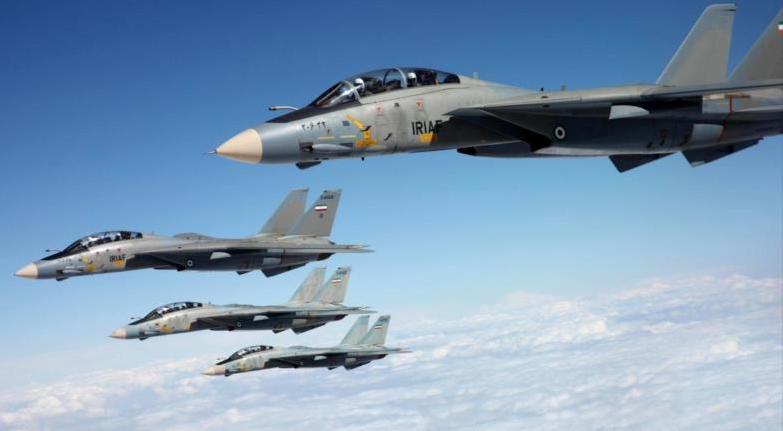
A number of reports have indicated that the Iranian Air Force has continued to expand its fleet of F-14 Tomcat air superiority fighters at a considerable rate, putting airframes which have been out of service for several decades back into action and training more crews to operate the elite twin seat jets. Iran placed an order for 80 F-14 jets from the United States during the 1970s, with the country’s leader Mohammad Reza Shah having personally selected the swept wing aircraft and made considerable efforts to gain Washington’s permission to purchase what were at the time the most advanced fighter jets in the world. Iran thus became the only export client for the F-14 in the world, with other U.S. defence clients making do with lighter, cheaper and less capable fighters designed with export in mind such as the F-16 and F-5. Indeed, the capabilities of the F-14 were so advanced that an export variant of the fighter was never officially developed, and the fighters flowed to Iran, after some light modifications, were produced with U.S. military markings which had to be erased by the American crews sent to train the Iranian airmen.
![[article_5ce4615f4a0c79_00132782]](https://militarywatchmagazine.com/m/articles/2019/05/21/article_5ce4615f4a0c79_00132782.jpg "Iranian Air Force F-14 Tomcat Air Superiority Fighter")
Following the Shah's overthrow in 1979 the Iranian fleet was left largely in a state of disrepair, with a lack of parts and American arms embargo meaning that in the early stages of the Iran-Iraq War only around a dozen of the 79 Tomcats delivered were serviceable. The eightieth fighter was never delivered, and Iran would continue to demand compensation or the aircraft's delivery for decades. With the U.S. having yet to integrate advanced medium and short range AIM-9 and AIM-7 missiles onto the aircraft, Iran's Tomcats were armed only with cannon and AIM-54 Phoenix missiles - the longest ranged air to air munitions in the world with a rang approaching 200km. The Phoenix was often successfully pressed into service against Iraqi jets at intermediate ranges - reportedly at ranges as short as 19km. Iranian Tomcats suffered only three losses to Iraqi fighters during the entire eight year war, while reportedly downing 160 Iraqi jets. Their ability to neutralise most Iraqi jets at almost ten times their retaliation range due to the advanced capabilities of their missiles was a considerable asset in the Iranian jets' favour. The fighters were so lethal that their very presence was reportedly enough to turn entire Iraqi air units back from an attack mission - for fear of the Tomcat’s reputation.
![[article_5ce4620b4d3a33_28285649]](https://militarywatchmagazine.com/m/articles/2019/05/21/article_5ce4620b4d3a33_28285649.jpg "F-14 Tomcat with Six AIM-54 Phoenix Air to Air Missiles")
Iran’s ability to acquire parts for its Tomcat fleet was limited, and while the country could quickly develop the manufacturing facilitates needed to service its simpler F-5E, and kept its F-4E Phantoms flying through a combination of reverse engineering spare parts and acquiring parts from other users on the black market, this was not an option for the far more complex F-14 of which it was the sole foreign operator. A severe shortage in AIM-54 missiles after the Iran-Iraq War's end further limited the Tomcat’s usefulness in Iranian hands, and only a fraction of the fleet remained operational for several decades. Recently however, relying on a number of new technologies including three dimensional printing, Iran has been able to more effectively reverse engineer parts both for the F-14 airframe and for the AIM-54 - allowing it to produce a more capable indigenous variant of the Phoenix missile while bringing the bulk of its long dormant Tomcat fleet back into service. F-14 jets in the Iranian fleet have reportedly received over 250 modifications and upgrades each, including the provision of new radars, cockpit displays, electronic warfare suites and other critical avionics. Combined with the new AIM-54 derived Fakour-90 missiles, this has made the Iranian Tomcats possibly the most lethal fighters in the Middle East.
![[article_5ce461a8bee7e0_29081904]](https://militarywatchmagazine.com/m/articles/2019/05/21/article_5ce461a8bee7e0_29081904.jpg "Iranian Fakour-90 Long Range Air to Air Missile")
The significance of a growing Iranian fleet of heavily upgraded F-14 fighters is not to be underestimated, and has considerable implications for the country’s aerial warfare capabilities. With most of the country’s Tomcats having seen well under a decade of service, some under five years, before a lack of parts placed them in storage, these airframes are essentially brand new and, with the supply of new parts, can be fielded in considerable numbers - with 40 F-14 fighters currently in active service, and some estimates putting this figure much higher. Altering prices for inflation, the F-14 would today cost over $150 million per aircraft to acquire today - likely considerably more for an export client. This is approximately twice the cost of Russia’s elite Su-35 air superiority jet - which is currently considered beyond the limits of Iran’s defence budget to purchase in large numbers. The F-14 would today be the most expensive fighter in the world to acquire, with the sole exception of the American F-22 Raptor, and when the almost new airframes are properly modernised, likely with Russian or Chinese assistance the result will most likely be the most capable fighter in the Middle East. With the Fakour-90 inheriting and improving on the high precision of the AIM-54, and using a more effective fuel composite reportedly developed with Russian assistance, the missile has a range of little under 300km - slightly less than that of its Russian analogue the R-33. This gives Iranian Tomcats, with a steady supply of indigenously manufactured munitions, an engagement range approximately four times that of the American 75km range AIM-120B, the main long range air to air missile of most U.S. clients, and almost three times that of the more advanced AIM-120C. Indeed, in the event of a regional war Iranian Tomcats can safely shoot down fighters over Saudi Arabia without leaving Iranian airspace - and even target jets over Israel if crossing a little over the Iraqi border. The Fakour-90 is very likely to have inherited the Phoenix's hypersonic speed, making it both faster and longer ranged than the AIM-120 deployed by Saudi and Israeli F-15s. The threat posed by a fast modernising and growing Iranian fleet of F-14 fighters to the United States and its regional allies therefore remains great indeed, and is a particularly critical asset in Iran’s favour as tensions continue to rise across the Middle East. How the country’s potential adversaries will respond, possibly with a greater reliance on stealth aircraft such as the F-35, on enhanced next generation variants of the F-15, or by requesting the United States deploy more of its F-22 Raptors to the region for protection, remains to be seen.